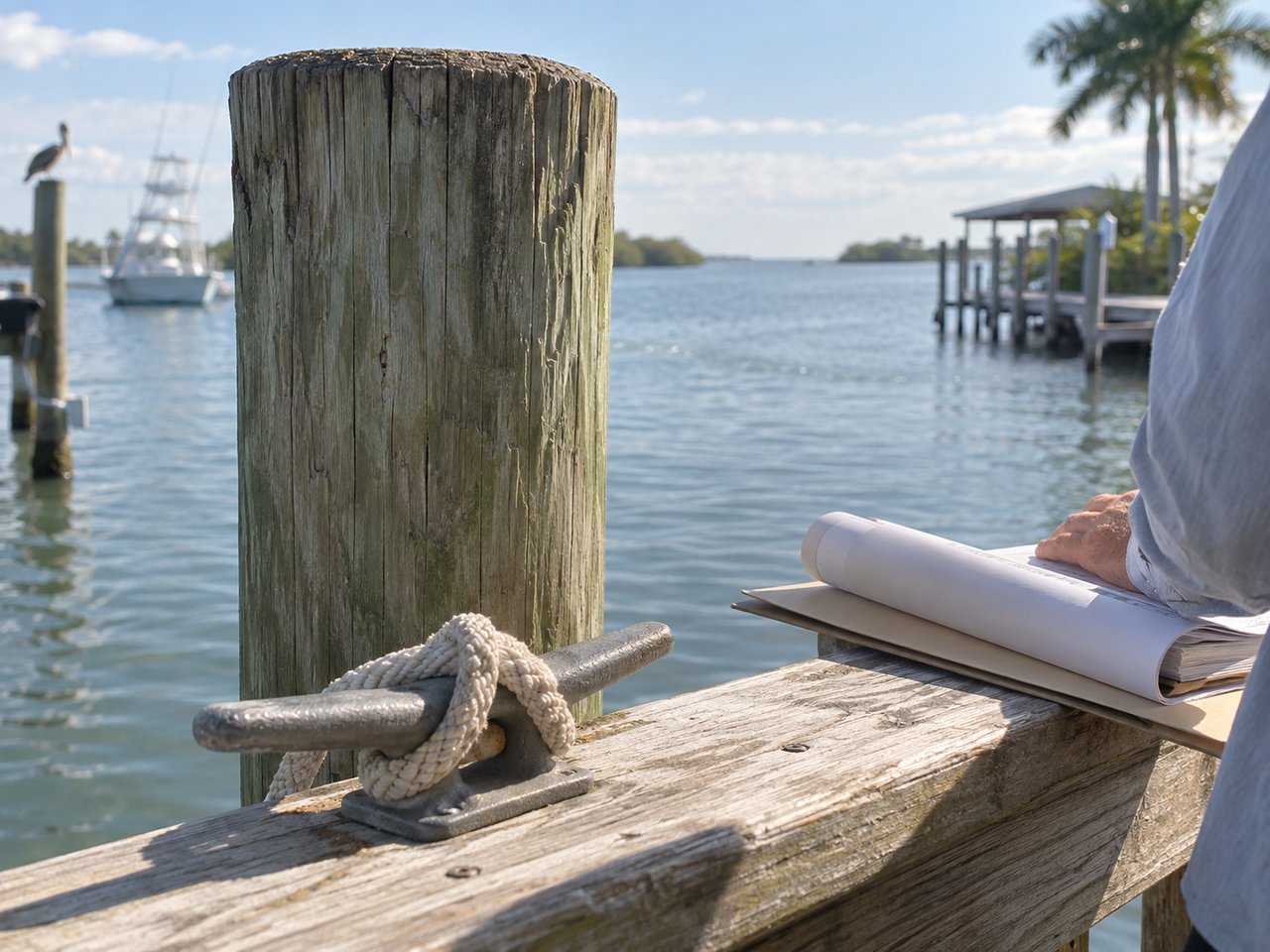
Selling Waterfront? Four Records to Have Ready Before You List
Lindsey Whitney September 26, 2026
Lindsey Whitney September 26, 2026
Waterfront Sales · Brevard County, Florida
Waterfront buyers are evaluating more than the house.
Depending on the property, they may also need to understand a seawall, dock, boat lift, shoreline work, flood risk and insurance history. Those questions do not produce one universal checklist, but there are four categories of records I want to locate early when preparing a waterfront listing.
Not every buyer will request every item. Not every property will have every document. The objective is to know what exists before a buyer is working under contractual deadlines.
01
02
03
04
A seawall is significant waterfront infrastructure, but I do not want a seller making representations about its age, construction or condition from memory when records may exist.
The questions are: What do we know about when it was installed? What do we know about its construction? Has it been repaired or evaluated? What can we actually document?
Useful records may include permits, invoices, warranties, repair records, engineering documents or prior assessments.
Brevard County has permitting processes for shoreline and marine construction, and work involving the Indian River Lagoon system can involve environmental permitting. The applicable record depends on the property, water body, type of work and when the work occurred.
I would not automatically tell every seller to order a new engineering inspection. That is a property-specific decision. I do want to identify any existing professional documentation and separate verified information from seller recollection.
Marine construction can involve more than one jurisdiction.
Brevard County's residential marine-construction guidance addresses permits for docks, seawalls and boat lifts in certain manmade bodies of water. Florida DEP also has permitting and exemption processes for docks and lifts, and some projects can involve federal authorization.
That is why "Does the dock have a permit?" can be too simplistic.
The better question is: What approvals, permits or exemptions applied to this particular structure when it was built or modified, and what records can we locate now?
If records are available, gather the permit, plans, final inspection or completion documentation, exemption confirmation and records of later modifications.
Elevation Certificates are frequently misunderstood.
Under FEMA's Risk Rating 2.0 methodology, an Elevation Certificate is not required to purchase NFIP flood insurance. FEMA does, however, allow detailed elevation information to be provided, and in some cases that information may affect the rating result.
So I do not automatically tell every waterfront seller to pay for a new Elevation Certificate.
I first ask whether one already exists. If it does, locate it and make it available as part of the property records. If a buyer's insurer, lender or other professional determines that additional elevation information is needed, that can then be addressed for the specific transaction.
And remember: a FEMA flood zone is not the same thing as a Brevard County evacuation zone.
If the seller carries flood insurance, the declarations page and policy information can provide useful background—but the seller's premium is not the buyer's quote.
FEMA's current rating methodology considers multiple property- and location-specific risk factors. A buyer should obtain their own insurance guidance rather than assume the seller's cost will transfer unchanged.
There is one important NFIP nuance: eligible NFIP building policies can sometimes be assigned to a purchaser when ownership transfers, subject to NFIP rules and required documentation. Private flood policies vary, so transferability should never be assumed.
Don't assume. Verify.
Length of ownership can tell me where to start looking. It does not verify anything.
If a seller has owned a waterfront property for 25 years and the dock predated the purchase, the seller may have limited firsthand knowledge about when it was installed. If the seller purchased three years ago and installed a lift during that ownership, more recent records may be easier to locate.
Neither fact tells me whether the structure was properly permitted.
Time at the property gives me context. It does not give me verification.
The same principle applies to seller recollection. What the owner remembers can help identify dates, contractors and places to search. Records are what allow us to represent a fact with more confidence.
Once a property is under contract, the buyer's due-diligence period creates real deadlines. A buyer may want to understand the seawall history. The buyer may ask about dock or lift approvals. An insurance professional may need property information. A lender may have requirements tied to financing or insurance.
Having available records organized does not guarantee that the buyer will have no additional questions. It reduces the number of basic questions that begin with, "Does anyone know where this document is?"
Waterfront preparation is not just cleaning the dock and photographing the view.
Part of preparing the property is preparing the information behind it.
For a Brevard County waterfront seller, that means identifying the marine structures on the property, reviewing ownership and improvement history, locating available permits or approvals, gathering existing elevation and insurance records, and clearly separating what is documented from what is assumed.
If you are preparing to sell waterfront property in Melbourne, Indialantic, Satellite Beach, Merritt Island or elsewhere on the Space Coast, Whitney Team Advisors can help build that property-history file before the listing goes live.
Data & Sources
Selling Waterfront?
Let's build your waterfront property-history file before the listing goes live.
A no-pressure conversation about waterfront selling on the Space Coast.

About the Author
Lindsey Whitney | Whitney Team Advisors
Lindsey Whitney is the founder of Whitney Team Advisors at Compass, serving homeowners throughout Melbourne, Lake Washington, Suntree, Viera, Indialantic, Satellite Beach, and the greater Space Coast. She specializes in strategic pricing, positioning, and negotiation for sellers in complex and higher-value transactions.
[www.whitneyteamadvisors.com](https://www.whitneyteamadvisors.com)

Why the buyer broker agreement should come after the conversation, not before it.

A simple seven step plan that helps Melbourne homeowners sell with clarity, confidence, and control.

A local Realtor's honest look at daily life living beachside in Indialantic, FL — the walkable coffee scene, the pace, and what it means if you're buying here.

A closing can be ready on every front and still stall on insurance timing. Here's why, and how to plan around it.
There's no universal answer, so here's how to think through the tradeoff before deciding.
Listings
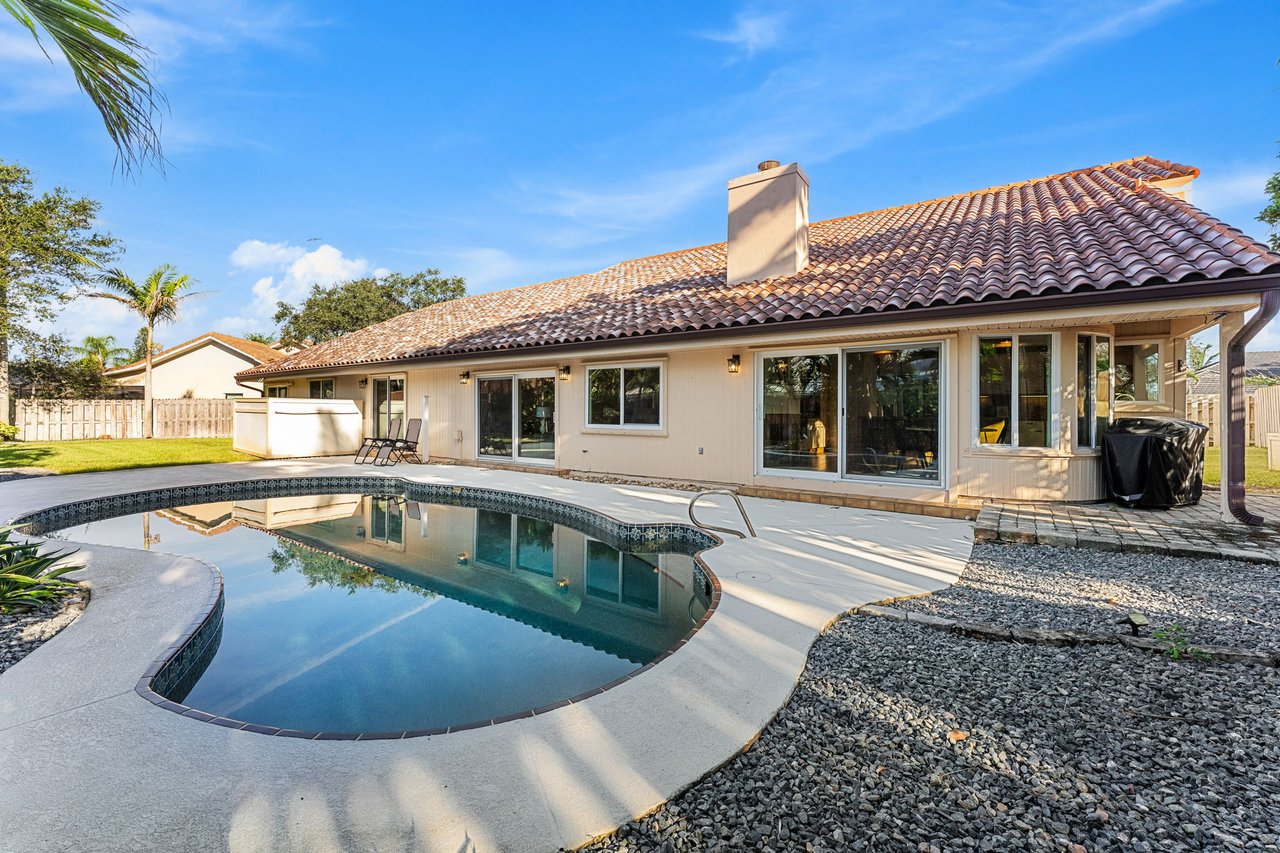
A 5-bedroom, 3.5-bath pool home in Rio Villa with nearly 3,900 square feet, distinctive architecture, and major improvements already complete.

Real Estate
Median price is a useful statistic, until it's asked to answer a property-specific question it was never designed for.

Buyer behavior is evidence of attention, not proof of intent, here's how to read it without overreacting.
Preparing a waterfront listing means preparing the paperwork behind it, not just the dock and the view.
Get top-notch real estate help from a dedicated team focused on finding your perfect home. They're all about making you happy and ensuring your home-buying journey is smooth and fun. Let them lead you to your dream home hassle-free.

WHITNEY TEAM
719 PINE TREE DR, INDIAN HARBOUR BEACH, FL 32937
